Free · no sign-in
Module 032 videosabout 5 minWith subtitles

How does AI decide right next to a machine?

A rover checks a fan after human approval. The small AI behind it: on-device models, liquid neural networks, decision models and rules. Watch them in either order.

1Nexa in practiceA feature of Nexa, as someone really uses it
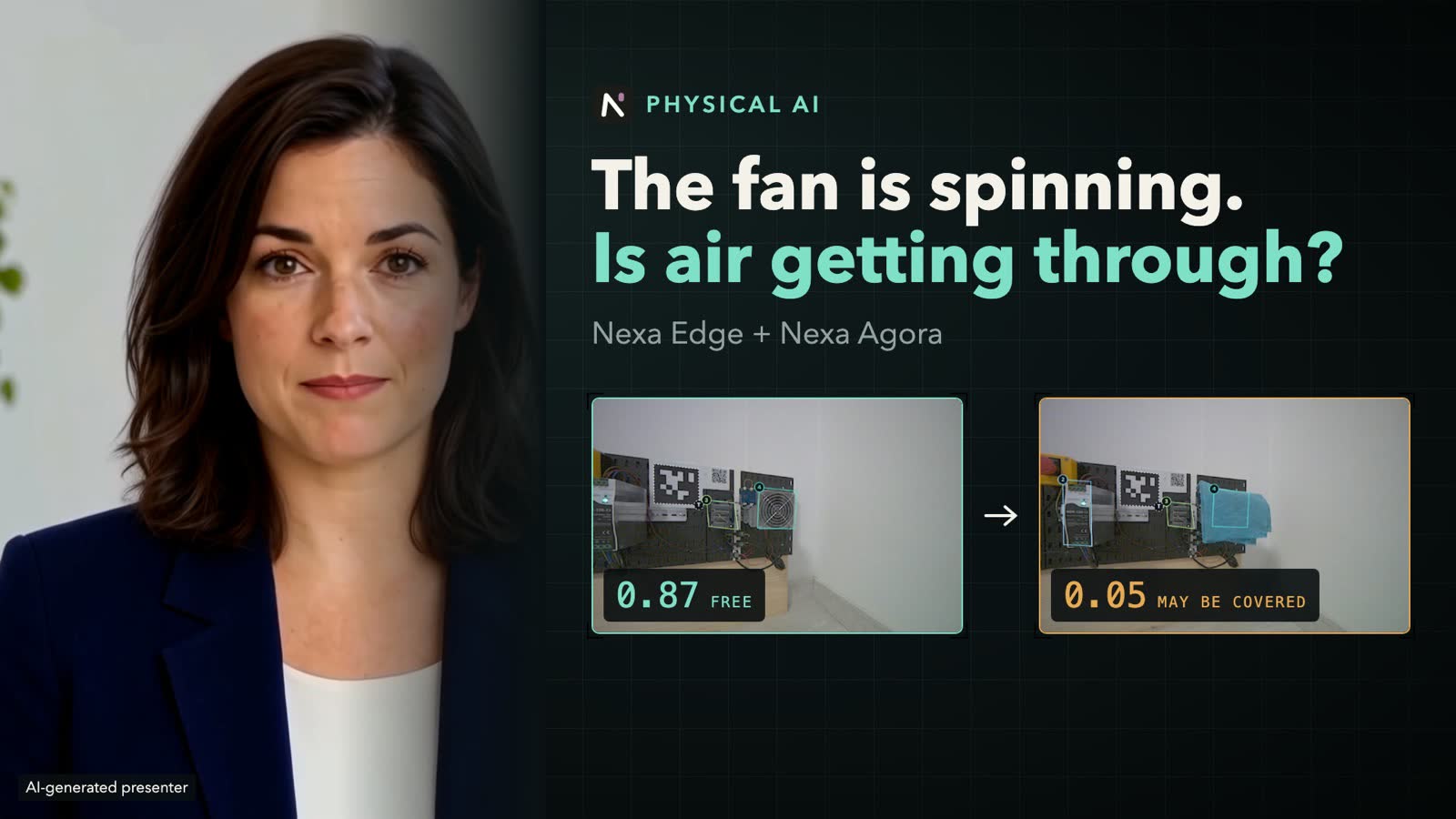
The fan is spinning. Is air getting through?2:14CC

Plays from YouTube. Nothing loads until you press play.

The fan is spinning. Is air getting through? · 2:14

How does a machine ask before it moves, and how does a person approve it from Nexa Agora?

On our test bench a fan cools a heat sink. The fan's speed sensor says it is spinning, but it cannot say whether air gets through. Nexa Edge sees the temperature rise and proposes an inspection. A person approves it in Nexa Agora. Zeus, our test rover, goes to the fan, takes a photo and compares it with a reference a person confirmed: «free» the first time, «it may be covered» the second, when a cloth blocks the grille. A person removes the cloth, and the temperature comes back down.
2Understand AIThe AI idea behind it, explained simply
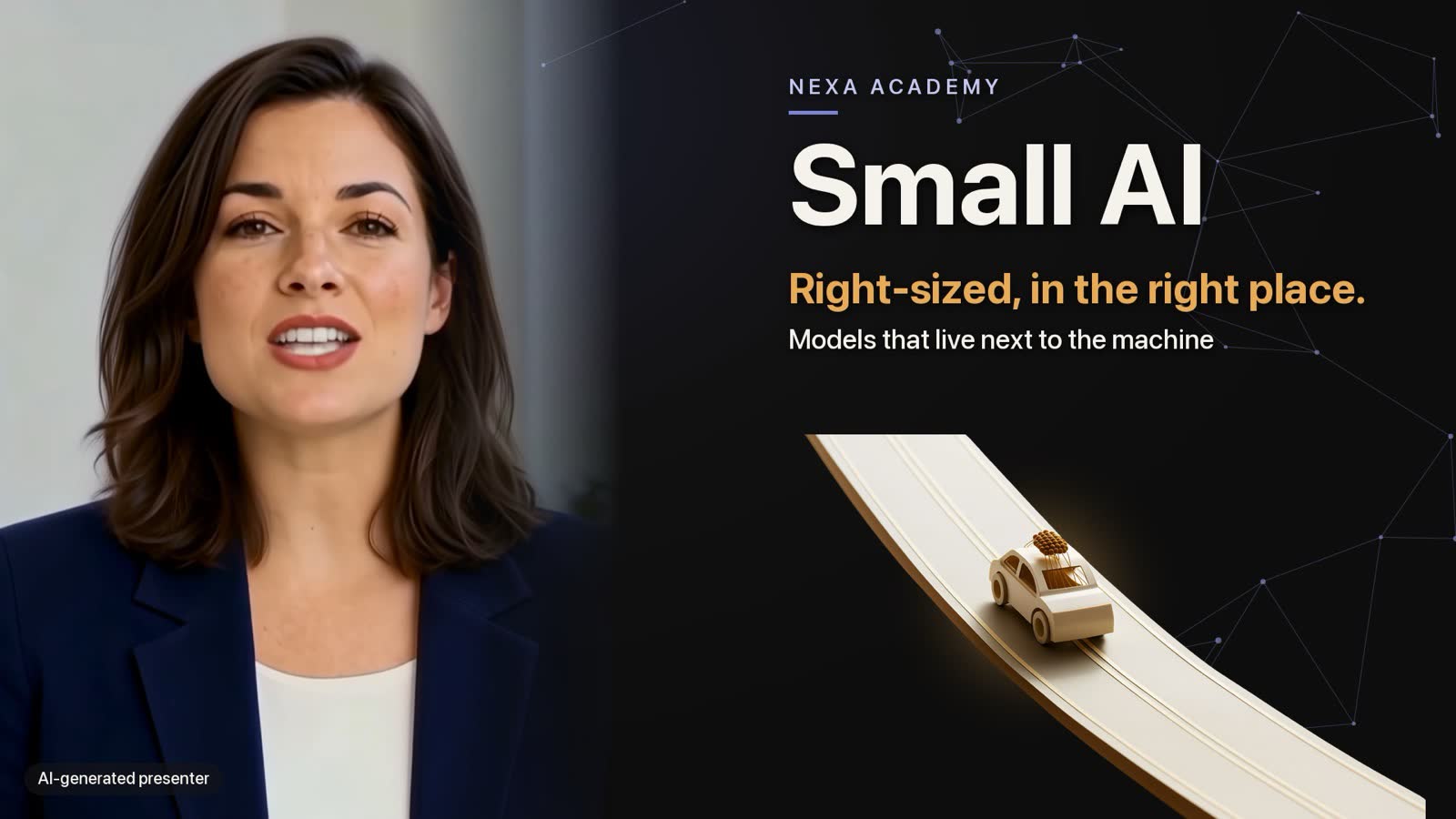
Small AI2:39CC

Plays from YouTube. Nothing loads until you press play.

Small AI · 2:39

What is small AI, and when is a small model, a liquid neural network, a decision model or a plain rule the right choice?

When we say AI, most people picture a giant model in a data centre that writes. The presenter of the Understand AI lessons shows the other end: models small enough to run right next to a machine, open weights you can run on your own hardware, liquid neural networks inspired by a worm with 302 neurons, decision models that answer a closed question, and the moments when no model at all is the smartest choice.

A note for the curiousHow the decision is shared on our test bench. A short read.

A board next to the bench reads the machines many times a second. Most readings are clear, and a plain rule handles them: if the temperature climbs past a threshold, it proposes an inspection. Only when a reading is ambiguous, like a vibration that could have two causes, does a small model on the board answer a closed question.

Nothing moves on the model's word. The proposal reaches Nexa Agora, and a person approves or refuses it. Only then does the rover go and check, and it compares its photo with one a person confirmed: a measurement, not a guess.

From a reading to a decision
  1. 1A readingmany times a second
  2. 2A rulefor what's clear
  3. 3A small modelfor what's uncertain
  4. 4A personapproves in Nexa Agora
  5. 5The machine actsand reports back

The ideas in this lesson

The words the videos use: pick one, read it in a few lines, and try it.

Sizes of AI

Small AI

AI models small enough to run on everyday hardware, like a laptop, a board or a robot, instead of a data centre. Not a lesser AI: an AI sized for one job, in the place where the job happens.

From the smallest to the largest: pick one.

Runs on a laptop, a board or a robot. Writes, within a narrower range.

On our test bench: the model on the board is small enough to fit in a few gigabytes, next to the machines.

What you learned

  1. 1AI comes in many sizes.Next to a machine, a small model on the device answers on the spot, keeps the data on site and works offline.
  2. 2Fewer neurons, more insight.Liquid neural networks keep adapting over time, so very small networks can handle changing signals and stay easier to inspect.
  3. 3The right tool for each part.Rules for what's clear, a small model for what's uncertain, and a person for anything that moves a machine.
Put it into practice

Discover Nexa Edge

See how Nexa Edge runs on a board next to your machines, proposes what to do, and waits for a person to approve in Nexa Agora. In preview, on request.

Discover Nexa Edge
Next module

This is the latest module. The next one arrives as soon as its two videos are online.

All of the Academy